

When I first started taking tennis more seriously, I quickly realized that it’s not just about powerful serves or precise backhands—it’s about how well I can move. That’s where tennis footwork drills at home come into play. Whether you’re training during the off-season, stuck indoors, or just trying to get faster on your feet, working on your footwork in your own space can make a huge difference.
In this blog post, I’m going to walk you through why footwork matters, how to practice it without leaving your house, and give you plenty of tennis footwork drills at home you can add to your routine. You’ll also find answers to some of the most common questions I’ve had (and you might be wondering, too) about footwork, solo practice, and the basics of movement on the court.
Table of Contents for Tennis Footwork Drills at Home
Why Tennis Footwork Matters

Good footwork is the foundation of every successful shot. I’ve learned that even the most technically perfect swing won’t help if I’m out of position. That’s why practising tennis footwork drills at home can be the game-changer you’ve been looking for.
From better court coverage to better shot preparation, solid footwork allows you to stay balanced, react quicker, and hit with confidence. Even when you can’t get to the court, there’s so much you and I can do in our living rooms, garages, or backyards to stay sharp.
How Can I Improve My Footwork in Tennis?
Improving your footwork starts with consistency and purpose. When I want to get better, I focus on three things: agility, balance, and endurance. Here’s what I’ve found works best:
- Set a routine of tennis footwork drills at home at least 3 times a week.
- Focus on tennis footwork techniques like the split-step, side shuffle, and quick directional changes.
- Record yourself or watch in the mirror to check your form.
- Incorporate both slow, controlled movements and quick bursts.
These steps might seem basic, but they’ve helped me improve immensely. And the best part? You don’t need fancy equipment or a full court—just a little space and motivation.
Top 10 Tennis Footwork Drills at Home
Here are ten footwork drills tennis at home that I’ve personally used to boost my speed, control, and balance. Try them and see what works best for you!
1. Split-Step Repeats
This is one of the most essential tennis footwork techniques. Jump lightly in place, landing in an athletic stance. Time your jumps to a metronome or upbeat music.
2. Side-to-Side Line Hops
Place a line of tape or a rope on the ground. Jump side to side over the line as quickly as you can. This builds lateral speed and control.
3. Shadow Tennis
Imagine playing a point and move as you would on the court. Incorporate lunges, split-steps, and recovery steps. It’s a full-body workout and a great mental rehearsal.
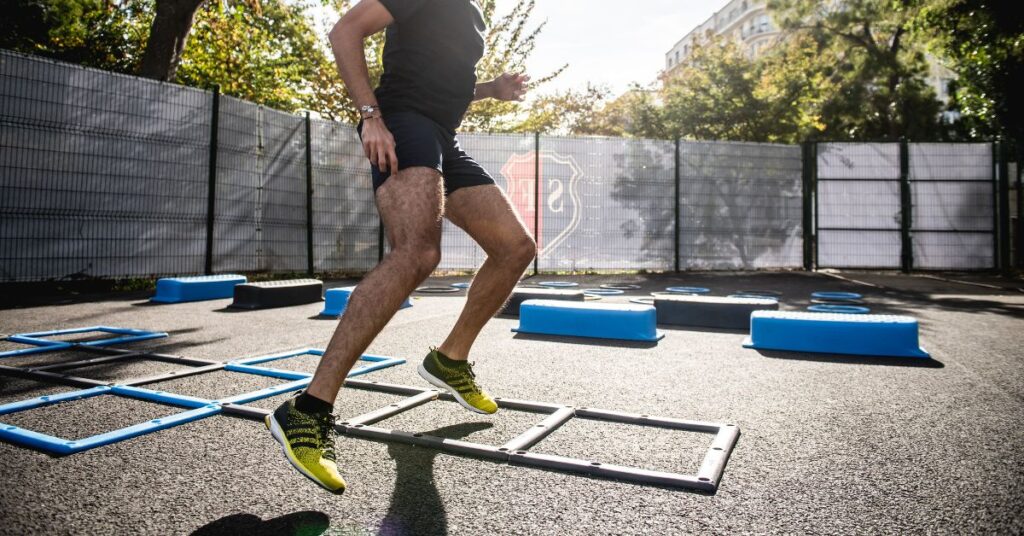
4. Quick Feet Ladder
Even if you don’t have an agility ladder, use tape to mark one. Step through each square with quick, precise steps. This improves your coordination and rhythm.
5. Box Step Drill
Stand inside an imaginary square. Step to each corner as if you’re moving to hit forehands or backhands. This mimics directional changes during rallies.
6. Jump Rope
Classic, but so effective. It boosts endurance, rhythm, and foot control—all crucial for tennis footwork drills at home.
7. Lateral Cone Touch
Place two objects (cones, shoes, books) a few feet apart. Shuffle between them and tap each one. Keep your knees low and stay light on your feet.
8. 1-2-3 Forward Shuffle
Take three quick steps forward, then shuffle back. It mirrors how you would approach a net shot and recover.
9. Dot Drill
Mark five dots (or use chalk) in an X shape. Jump between the dots in a set pattern. It’s fantastic for foot control and reaction time.
10. Mirror Footwork Drill
Stand in front of a mirror and practise split-steps and side shuffles. It helps you correct posture and track body alignment.
You can mix these into your daily warm-up or do a 20-minute session focusing solely on footwork. The results will surprise you!
More on Tennis Footwork Drills at Home
How Can I Practise Footwork at Home?
This was something I used to ask all the time. And the answer is: it’s easier than you think! Here’s what I recommend:
- Use visual markers like cones or tape to simulate positions.
- Incorporate resistance bands to build strength while performing footwork patterns.
- Do it in short bursts—5 to 10 minutes, several times a day.
- Follow a plan, like a camp week full days schedule. For example, train for 5 days in a row with increasing intensity and rest on the weekend.
Even if you have limited space, there are always ways to modify and adapt tennis footwork drills at home to your environment.
How Can I Practise Tennis Alone at Home?
This is where it gets fun. Practicing tennis at home doesn’t have to mean just swinging at the air. Here’s how I do it:
- Shadow swing your strokes while moving your feet, as if you’re rallying.
- Practise drills for beginners tennis with wall strokes—hit a ball softly against a wall if space allows.
- Combine tennis footwork drills for beginners with strength moves like squats or lunges.
- Watch pro matches and mirror their footwork patterns.
Sometimes I even set a timer and try to mimic a rally or match pace for 10 minutes straight—it’s intense!
What Are the Basics of Tennis Footwork?
The basics are everything. When I started, I focused on these core tennis footwork techniques:
- Split-Step – This is your starting position. You do this just before your opponent hits the ball so you’re ready to move in any direction.
- Side Shuffle – Staying low and moving laterally is key for chasing groundstrokes.
- Crossover Step – Used when you need to cover more ground quickly, especially on wide balls.
- Recovery Step – After hitting, you need to recover to the centre or a balanced position.
- Pivoting – Helps you change direction without losing control or speed.
These fundamentals are included in all the tennis footwork drills at home I practice, and they’re especially important for players at any level.
Tips to Improve Your At-Home Footwork Routine
Here are a few extra tips that have helped me stick with my training:
- Warm up properly. Skipping rope or jumping jacks get your blood flowing.
- Use music. Upbeat tracks help with rhythm and make drills more enjoyable.
- Track your progress. Keep a log of how long you can do each drill or how many reps you achieve.
- Challenge yourself. Add a new drill each week or increase your reps every few days.
- Stay consistent. Even 10 minutes of tennis footwork drills at home daily can create noticeable improvements over time.
Final Thoughts
You don’t need a court or fancy equipment to get faster, stronger, and more agile on your feet. By dedicating time to tennis footwork drills at home, you’re setting yourself up for real improvement on the court. I’ve noticed that after just a couple of weeks of regular footwork practice, my positioning, balance, and confidence have all gone up.
Whether you’re training for a week full days tennis bootcamp, or just trying to refine your match play, adding footwork to your home routine is one of the smartest decisions you can make.
So go ahead—lace up, clear a bit of space, and start moving. Your future self on the tennis court will thank you for every shuffle, skip, and split-step.
Pin this!
Related Reading for Tennis Footwork Drills at Home
- Tennis Drills for Beginners: 5 Simple Ways to Improve Quickly
- Top 5 Tennis Drills To Improve Your Forehand Fast
- 5 Best Agility Exercises for Tennis to Improve Court Performance
- Why a Tennis Coach Online Might Be the Best Decision You Ever Make for Your Game
- 7 Best Tennis Apps for Learning (+ My Own App!)